Pages

Showing posts with label Books We Loved. Show all posts

Wednesday, May 13, 2020

"This earthly life is a battle:" Wisdom from Ma Ingalls


Illustration by Helen Sewell *

Last year, our family read through the entire Little House series by Laura Ingalls Wilder. I had a moment while reading Little House on the Prairie when the Ingalls family's wagon is coming up on the prairie in Kansas for the first time, that I had to catch my breath. I felt so grateful to Laura Ingalls Wilder for giving us this glimpse into her life with all its imperfections and setbacks, to be able to experience this moment in history for ourselves. In her biography by William Norris, “Laura explained that her desire to write came from her feeling that what she had experienced on the prairies were ‘stories that had to be told.’ She said that her memories of pioneer days “were altogether too good to be lost.”
I agree with Laura that these stories are too good to be lost. Lately, as we go through these hard times, I have been even more grateful to know these stories. But I also realized as we journeyed with the Ingalls that Laura had to be brave to write this story as well, because it wasn’t altogether a happy story. Brent joked that the series should have been called, “A Series of Unfortunate Events,” and it really was: prairie fires, injuries, malaria, blindness, financial difficulties, and millions of grasshoppers. That is all before the endless blizzards and near starvation of The Long Winter. Just reading those books made Brent and I huddle around the woodstove afterward because the feelings of coldness and hunger were so visceral. I have often thought to myself during this quarantine, "At least I'm not twisting haysticks."
Illustration by Helen Sewell, original illustrator of Little House on the Prairie

In the summer right after we moved, I was checking on our little tomato garden one morning. A kind of white fuzzy caterpillar had been landing on our plants. After researching a bit, I found out that it was the Hickory Tussock caterpillar, which not only could deleaf a tree, but its black spikes were venomous and would sting you if you touched it. (Brent learned that the hard way.) That’s when I heard the strangest noise, a kind of munching noise coming from the trees above me. I looked up for the source, and saw a caterpillar lower itself on a strand down to the ground. As I scanned the distance, I realized that the sound was the sound of hundreds of hickory tussock caterpillars propelling down from the tree on our lawn. I ran inside and grabbed a broom and began knocking them out of the tree and squishing them with my flip-flop. I called Ella to help, and together we killed probably a thousand caterpillars that year. Our trees and garden were saved, but it gave me a special empathy with the Ingalls family when the grasshoppers landed in their fields. What could be more horrifying than the thought of millions of grasshoppers landing in your hair, under foot, crawling over your house?
I wondered how did these pioneers do it, how did they keep on going through the disappointments, the crop losses, the famine, the diseases?
While I found myself often frustrated with Pa’s wanderlust and inability to settle down for the sake of his family, I have to admit that I, too, often get caught up in my own idealist visions of the future. For ten years, we were stuck with a house in the city, when we longed for a rural life. If we could just move to the country and raise chickens, we would be happy, we told ourselves. Yet when we finally achieved our dream, nothing turned out as we thought it would. That began a series of frustrations and disappointments that has lasted over two years and included natural disasters and a pandemic. Yet none of it compared to what the Ingalls went through. 
Illustration by Helen Sewell, original illustrator of Little Town on the Prairie

After surviving the grasshoppers, Mary’s blindness, and the Long Winter, they finally move into their claim shanty and plant their corn. Then the crows arrive to eat their crops, and it’s really too much for Laura.
“The prairie looks so beautiful and gentle,” she said. “But I wonder what it will do next. Seems like we have to fight it all the time.”
“This earthly life is a battle,” said Ma. “If it isn’t one thing to contend with it’s another. It always has been so, and it always will be. The sooner you make up your mind to that, the better you are and the more thankful for your pleasures.”


My commonplace book art inspired by an illustration by Helen Sewell in Little House on the Prairie

Ma’s words helped me with my own frustrations. I realized that I had been a victim of my own idealism, that I had written a story in my head of how God would work in my life that had nothing to do with my reality. Like Pa, choices that I had made to make that dream a reality may have even hurt my family. The disappointment of losing that dream had so clouded my vision that I felt like I had no story to tell. My words were literally stuck in my head. I wanted the story with the happy ending I had written in my head. I wanted God to tie up everything in a neat bow.
 I don’t like to think of life as a battle. Yet in the current state of the world, life seems to feel more and more like a battle every day.
Pa always seemed to think that happiness was just a little bit farther west, but Ma was more practical. Early on, she accepted that life is a series of things to contend with, and it’s acceptance of this reality, that allowed her to appreciate the small pleasures in life and be thankful. I wondered if maybe, she was right.
Earlier this year before the pandemic, Brent and I had sat down to discuss life and mission. These sessions have often resulted in a big vision for our life and crazy adventures, but this time, we came up with a simpler motto for our year. "One foot in front of the other." We can’t see far ahead, but we can take the next step, face the next thing we need to contend with, and hopefully be thankful for our pleasures along the way. I think Ma would approve.

*Our tiny small-town library has some really old treasures in its stacks including some original copies of the Little House on the Prairie series by Laura Ingalls Wilder with illustrations by Helen Sewell. While we love our editions with illustrations by Garth Williams, I loved this older style too, and thought I would share.

Thursday, May 21, 2015

The Secret Garden

20150501_132607
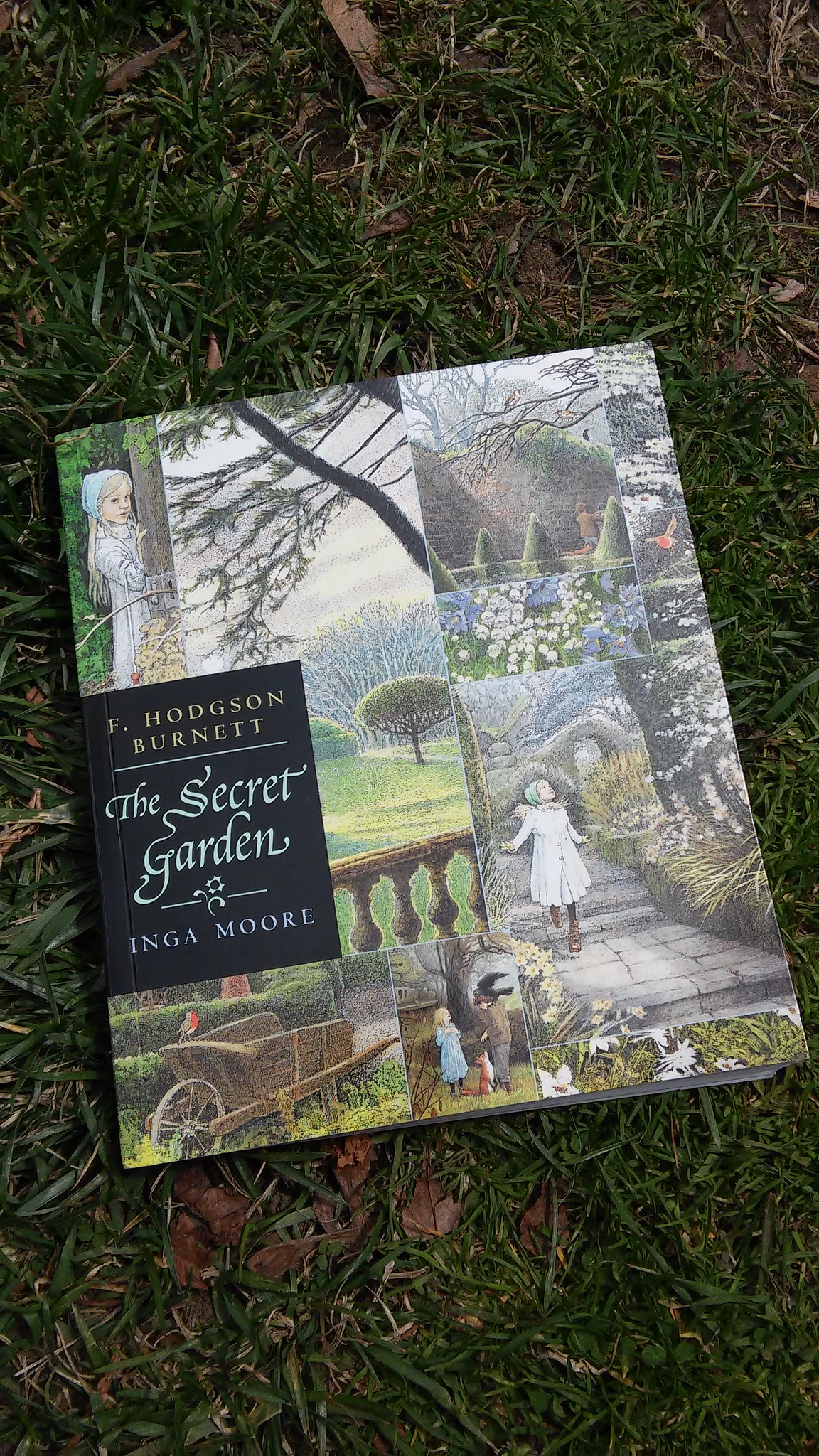
 Reading your favorite childhood book is always a delicate proposition. I was so eager to introduce my favorite book, The Secret Garden by Frances Hodgson Burnett to my kids, that I almost ruined the experience for them. A few years ago, we started reading the book as a bedtime read-aloud. I did not remember just how horrifying the first chapter is with a small girl abandoned in a household wiped out by a cholera plague. Halfway through the  chapter, my child looked up at me with scared eyes like, "Are you sure this is a good book, Mom?" We decided to put it away for a few years, and I am glad I did. This spring, we picked up the book again, and it was just the right time to read it. We were able to get through the tough chapters with some reassurance and embrace the beautiful healing redemption of the book. We all loved this version with exquisite illustrations by Inga Moore. There are full-color illustrations on almost every page and it really helped the younger kids stay engaged with a fairly long book. (My younger ones are not nearly as sensitive as their older siblings.)
20150422_122417
The wonderful thing about rereading a classic book is that it always speaks to you in new ways. I have never read the book as a mother, and this time I found myself identifying so much with Martha and Dickon's mother, Mrs. Sowersby. "It's like she says: 'A woman as brings up twelve children learns something besides her ABC. Children's as good as 'rithmetic to set you finding out things."

The whole course of motherhood and homeschooling has been one long process of "setting me to find out things". Most often those things were not about my kids at all, but about my own identity and heart.

As we were winding down our homeschool year, Mrs. Sowersby advice for raising healthy children seemed sound as well. "Give her simple, healthy food. Let her run wild in the garden. Don't look after her too much. She needs liberty and fresh air and romping about."

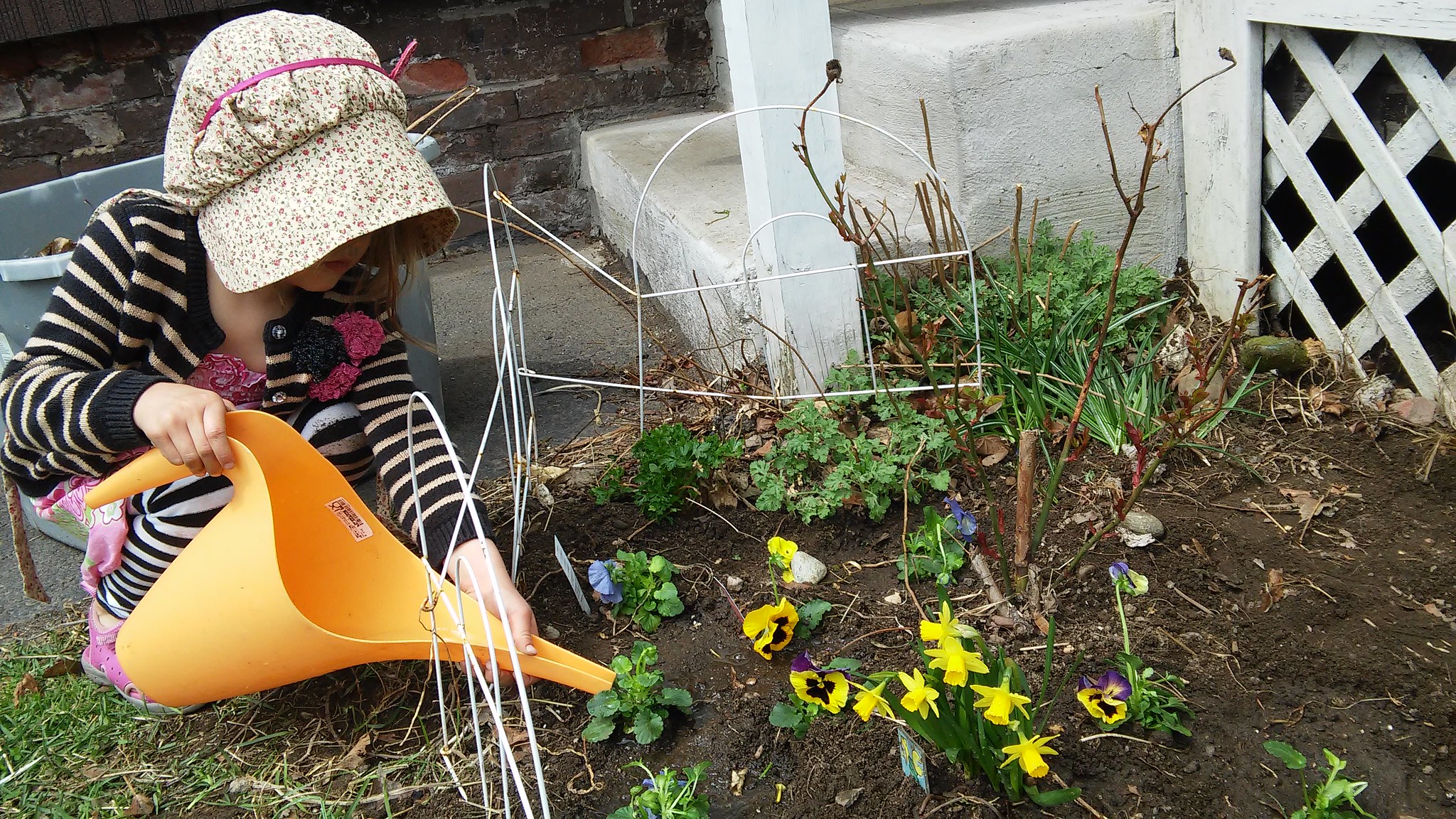
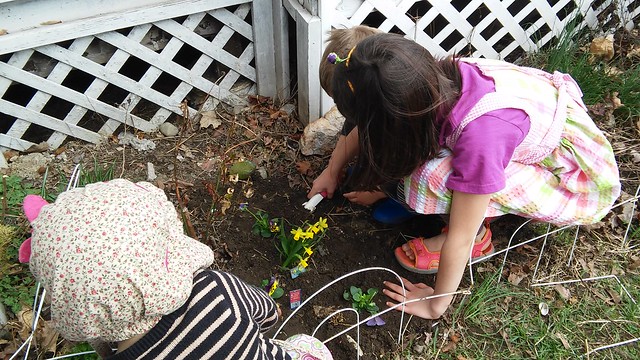
So our lessons did involve a lot of fresh air and romping about from learning to skip rope to planting our own not-so-secret garden.
20150422_120349 
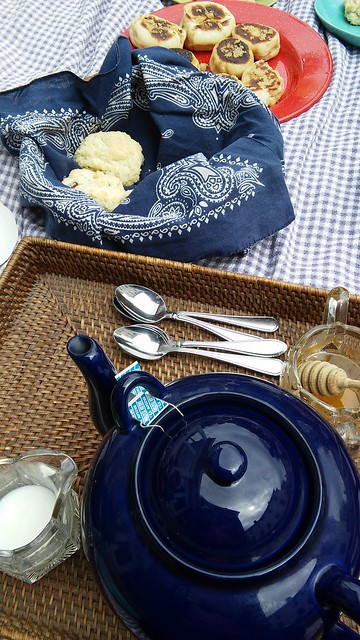
We had a lovely outdoors tea party with two recipes from Inside the Secret Garden: A Treasury of Crafts, Recipes, and Activities by Carolyn Strom Collins: currant buns and dough cakes. I mixed up our own Secret Garden tea blend of English Teatime and Bengal Spice.While we drank tea, the girls peppered me with questions like: who was your favorite character and what was your favorite scene? They were also full of questions about Frances Hodgson Burnett's life and houses, which we were also able to find answers for in Inside the Secret Garden. It was our first real literary discussion not driven by what they should know, but just by love for the characters and scenes that moved them. It gives me great hope for the future.
20150501_130528 
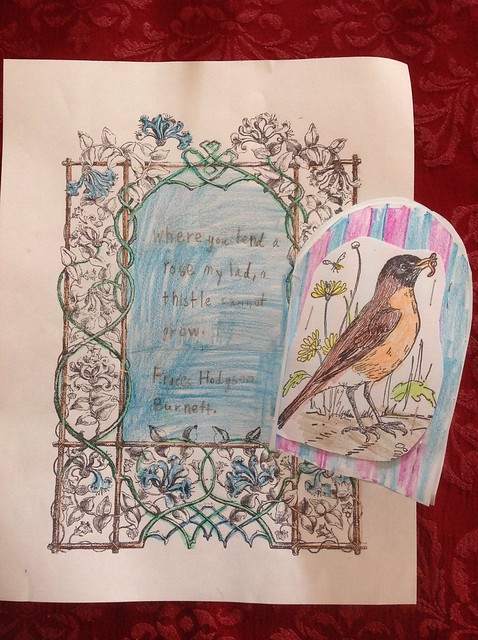
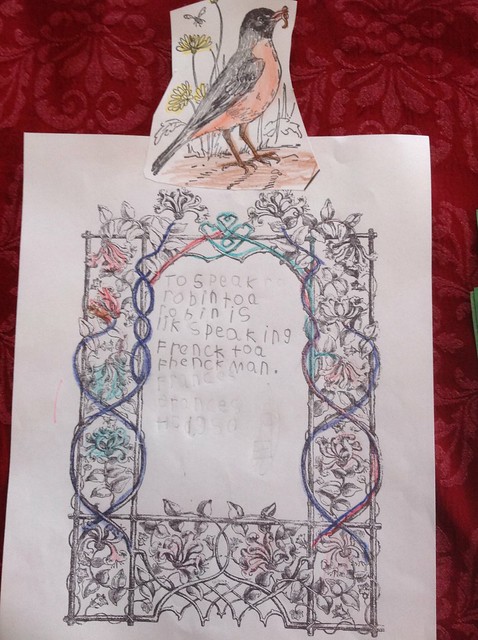
We tried our hand at some copywork from The Secret Garden. I printed out a few simple vintage graphics from The Graphics Fairy, and read them a list of quotes from goodreads. Then I wrote one out for them to copy. I was not expecting that it would become quite the art project it did.  Untitled 
Untitled
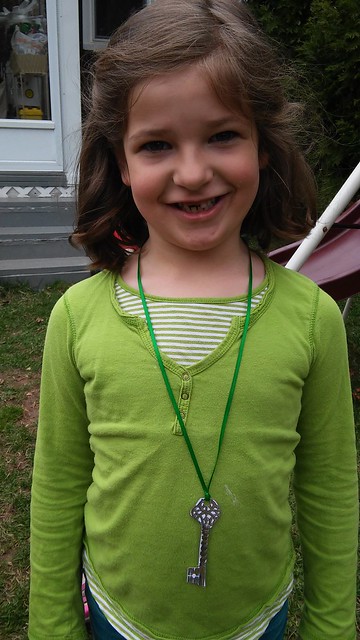
 The girls even took one of the images of an old-fashioned key and decided to make it into jewelry. Their necklaces turned out beautifully.
 20150430_131938 
I can't quite describe their disappointment when I told the kids that there was no sequel to The Secret Garden. They were not ready to leave Frances Hodgson Burnett's world yet, so we are following it up with A Little Princess.

Friday, January 30, 2015

Things I learned and Books We Loved in January

Things I learned in January:
December was a really hard month in homeschooling, as you might have gathered from my posts.Too much excitement, not enough work school getting done, and Mom in a miserable mood. To truly finish it off with a bang, my oldest daughter had an emergency appendectomy on New Year's Eve. But January has been full of blessed ordinariness, lots of reading, and renewed excitement about homeschooling.

One thing that has made such a difference is that we now have a better routine for the day. At the beginning of the month, I sat the kids down and asked them what they wanted to get out of our days. Mabel suggested, read more books! Ella wanted to learn to ice-skating. I began to tell them about some of the things I was interested in. I recently purchased a new writer's curriculum called Brave Writer. I'm only a few chapters in, but the kids were so excited when I mentioned some of her ideas like Poetry Teatimes and narrating stories to me while I write them down.

I explained to the kids that in order to fit all this fun new stuff in, we'd have to plan out our days better. We all went up to the computer and made a handy new picture schedule with Microsoft word. You won't believe the difference this has made. They are getting ready in the morning earlier (with only a little bit of prompting), helping me with morning chores like unloading the dishwasher and folding laundry. We've been able to do our Five in a Row, read-aloud during snack each day, have some physical activity, and in the afternoon individual lessons,quiet time, and tidying up. We've also designated one special thing per day: Monday is Music, Tuesday: Art, Wednesday: Writing, Thursday: Poetry Tea Time, and Friday: cleaning (the kids actually suggested that!) I have never been a routine person before, but I am starting to be a believer.

January is also such a great month for reading. Brent and I both have a stack of new books we are working through from Christmas. The older girls are starting to read more on their own! So here were some of our favorites in January.

My reading:
Disclaimer: I really wanted to love this book even before I read it because I love the author's website Story Warren: Allies in Imagination so much. If you haven't heard of Story Warren before and are a parent looking for ways to inspire your kids in faith, imagination, and reading, you should check it out. The author S. D. Smith is also from West Virginia, so even more reason to hope for the best because West Virginians are awesome. 

The good news is that I loved the book. The Green Ember is a fantasy book about Heather and Picket, rabbit brother and sister. When their family home is attacked and their parents taken captive, they escape and find a new home with a group of rabbits who aim to bring back The Mended Wood that has been destroyed. The characters have a lot of depth and I totally identified with their pursuit to find their purpose in the world. The book is also firmly rooted in hope. It made me think of a line from Katherine Paterson's essay Hope and Happy Endings. "Hope for us cannot simply be wishful thinking, nor can it be only the desire to grow up to and take control of our own lives. Hope is a yearning rooted in reality that pulls us toward the radical biblical vision of the world remade." This book does exactly that, but even if you don't want to go that deep with it, it is still an awesome adventure story you and your kids will love. I hope there will be a sequel.

The Spark is a memoir of a family's journey with their autistic son. Jake has a genius IQ, but is non-verbal as an autistic preschooler. Barnett decides to follow her intuition and nurture her son's interest in light and designs, and soon finds that he is teaching himself college-level math and astronomy. This memoir was surprisingly gripping as Barnett takes you inside their families struggles. I read it in two days because I couldn't put it down. Ultimately, it's about finding what is special about your child, but also giving them plenty of time to just be a kid and time for the family to build memories together and play, even when dealing with so many family challenges.


The kids requested that we rewatch the entire Anne of Green Gables mini-series recently. It didn't take much to twist my arm. Now they are obsessed with the soundtrack just like last winter and playing many games of Chase the Cow around the house. My two-year-old son even requests that they play Avonlea. His summation of the movie. "Anne fell down in the mud. She got mud on her face." and "Anne died in the water and the man rescued her."

I got a new-to-me L.M. Montgomery book for Christmas: Jane of Lantern Hill. It's a little more modern than the Anne books, about a girl who discovers that the father she thought was dead, is alive. When he asks her to visit him on PEI for the summer, she comes alive. After life with her domineering grandmother, she finds that she loves being useful and able to care for other people and animals. My favorite scene was when her father introduces her to the wonder of the stories in history and the Bible. She has always been forced to read these books, and suddenly with his interest and love, she finds that she actually wants to read.

I discovered Elizabeth Goudge last year when I read Pilgrim's Inn, and I fell in love with her writing. I picked up The Scent of Water this year and also loved it. Goudge's books are usually set in quaint English villages. In this one, the main character Mary, a Londoner, inherits her cousin's house in the English countryside. The story is also about Mary's spiritual journey, though and Goudge lets her characters grapple with spiritual questions in such a natural way that it never comes off as cheesy or in your face. Goudge is a master of symbolism. I always find myself wanting to look up images from medieval tapestries and bits of poetry when I finish. Such beauty and healing in these books.


Brent's reading:

Brent's favorite book of late (I also really loved it.) was Jennifer Fulweiller's spiritual memoir Something Other Than God. Some blog writers' books just read as a collection of blog posts, but Fullweiller's story of her journey from atheism to Catholism was beautifully written. She takes you through each step of her journey of faith without jumping to the end and writing backwards, so that you actually get to grapple with each question she has. She's also quite funny, which is a bonus. 
Did I mention the girls are reading?

Ella has always been such an auditory learner that she hasn't had a lot of drive to read books on her own. Recently I found her secretly reading Ramona the Pest at quiet time. Now she's finished that and moved on to Beezus and Ramona. I remember reading the whole series in third grade. Sweet to see her enjoying them now.


Ella has also been loving the Sir Cumference books.  This is a whole series of books about math topics like angles, shapes, and graphing, but told with knights and quests. They  make math really approachable and fun. Sir Cumference and the Great Knight of Angleland has a special medallion at the back that the knight uses to measure angles and find his way through a labyrinth. The kids took out the medallion and decided to make their own. I, of course, found a protractor to help them.


The kids' favorite read-aloud was The Ordinary Princess by M. M. Kaye. This reads like a classic fairy tale, but a rejected fairy gives the baby princess the gift of being ordinary. She grows up and the whole family is distressed because she can't be married off. She, meanwhile, is charming, witty and loves to escape the castle to play in the woods. When the family decides they will hire a dragon and lock the princess in a tower, to try to trick a champion into saving her and marrying her, she runs away to the woods and eventually gets a job as a scullery maid in another castle, where she wins the heart of the young King who lives there, with her lovely personality and brains and ordinariness. If your girls love princess tales, you should definitely read this one.
Mabel is 6. She showed a lot of early interest in reading, but became really frustrated last year as the stories got longer in her reader. We ended up stopping reading lessons all together. Apparently the best thing you can do with her is stop and wait until she's ready. This has been true from everything from potty training to reading, but it takes me a while to get the picture. This year she has been speeding along in reading. While we took the month of December off from formal reading lessons, she decided to pick up her Elephant and Piggie books and start reading. She has 10 of these and has read them all and moved on to other easy readers. Now she is requesting that we do two reading lessons a day. Thank you Mo Willems for writing easy reader books that are actually easy to read and SO FUNNY!